CRISTO RAUL.ORG ' |
 |
READING HALLTHE DOORS OF WISDOM |
 |
Blessed be the peaceful because they'll be called sons of God |
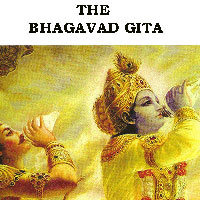 |
THE BHAGAVAD-GITATHE BOOK OF DEVOTION. DIALOGUE BETWEEN KRISHNA, LORD OF DEVOTION,AND ARJUNA, PRINCE OF INDIA |
328 |
Five brothers: the story of the Mahabharata |
Elizabeth Seeger |
||
252 |
The Great Indian Epics The Stories Of The Ramayana And The Mahabharata |
John Campbell Oman |
||
388 |
THE BUDDHA AND HIS RELIGION |
J. BARTHELEMY SAINT-HILAIRE |
||
 |
39 |
340-293 BC |
CHANDRAGUPTA MAURYA |
P.L. BHARGAVA |
|
111 |
STORY of INDIA VOLUME II From the Sixth Century B. C. to the Mohammedan Conquest, Including the Invasion of Alexander the Great |
VINCENT A. SMITH |
|
ALL ABOUT THE HISTORY OF INDIA |
AUTHOR |
|
HTML |
THE CAMBRIDGE HISTORY OF INDIA VOLUME I : ANCIENT INDIA |
WOLSELEY HAIG |
1500-500 BC |
THE VEDIC AGE |
MAJUNDAR |
EARLY HINDU INDIA. A DYNASTIC STUDY Volume I |
KUMAR MAZUNDAR |
|
EARLY HINDU INDIA. A DYNASTIC STUDY Volume II |
||
EARLY HINDU INDIA. A DYNASTIC STUDY Volume III |
||
200 BC. 650 AD |
EARLY HISTORY OF NORTH INDIA FROM THE FALL OF THE MAURYAS TO THE DEATH OF HARSA |
SUDHAKAR CHATTOPADHYAYA |
HISTORY OF ANCIENT BENGAL |
CR.MAJUNDAR |
|
THE EARLY HISTORY OF THE MADRAS (CHENNAI) REGION |
K.V. RAMAN |
|
HISTORY OF ORISSA, FROM THE EARLIEST TIME TO THE BRITISH PERIOD. VOL.I |
R.D. BANERJI |
|
HISTORY OF ORISSA, FROM THE EARLIEST TIME TO THE BRITISH PERIOD. VOL.II |
R.D. BANERJI |
|
A HISTORY OF RAJASTHAN |
RIMA HOOJA |
|
A HISTORY OF SIND |
Suhail Zaheer Lari |
|
EARLY HISTORY OF THE DEKKAN DOWN TO THE MAHOMEDAN CONQUEST |
R.G. BHANDARKAR |
|
340-293 BC |
CHANDRAGUPTA MAURYA |
P.L. BHARGAVA |
623-303 BC |
THE AGE OF IMPERIAL UNITY |
MAJUNDAR |
269-232 BC |
ASOKA.THE BUDDHIST EMPEROR OF INDIA |
VINCENT SMITH |
217 BC 517 AD. |
A HISTORY OF THE IMPERIAL GUPTAS |
S.R.GOYAL |
600 BC 700 AD |
THE EARLY HISTORY OF INDIA FROM 600 B.C. TO THE MUHAMMADAN CONQUEST INCLUDING THE INVASION OF ALEXANDER THE GREAT |
VINCENT SMITH |
320 BC 970 AD |
THE CLASSICAL AGE |
MAJUNDAR |
630 -982 |
THE AGE OF IMPERIAL KANAUJ |
MAJUNDAR |
HTML |
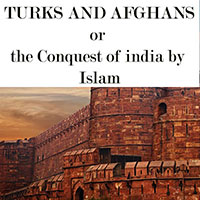
THE CAMBRIDGE HISTORY OF INDIA VOLUME III : TURK AND AFGHANS |
WOLSELEY HAIG |
697-1471 |
THE STRUGGLE FOR EMPIRE |
MAJUNDAR |
647-1526 |
HISTORY OF MEDIEVAL INDIA |
ISHWARU PRASAD |
1206-1526 |
THE DELHI SULTANATE |
MAJUNDAR |
1542-1605 |
AKBAR, THE GREAT MOGHUL |
VINCENT SMITH |
1483-1782 |
THE CAMBRIDGE HISTORY OF INDIA VOLUME IV : THE MUGHUL PERIOD |
WOLSELEY HAIG |
1026-1788 |
THE MUGHUL EMPIRE |
MAJUNDAR |
1497-1858 |
THE CAMBRIDGE HISTORY OF INDIA VOLUME V : BRITISH INDIA |
H. H. DODWELL |
1494-1530 |
HISTORY OF INDIA UNDER THE TWO FIRST SOVEREIGNS THE HOUSE OE TAIMUR, BABER AND HUMAYUN. VOL.1: BABER |
WILLIAM ERSKINE |
1530-1556 |
HISTORY OF INDIA UNDER THE TWO FIRST SOVEREIGNS THE HOUSE OE TAIMUR, BABER AND HUMAYUN.VOL.2: HUMAYUN |
WILLIAM ERSKINE |
1605-1707 |
AURANGZIB and the Decay of the Mughal Empire |
Stanley Lane-Poole |
1658-1853 |
THE MARATHA SUPREMACY |
MAJUNDAR |
1858-1918 |
THE CAMBRIDGE HISTORY OF INDIA VOLUME VI: THE INDIAN EMPIRE |
H. H. DODWELL |
-0 -1911 |
THE OXFORD HISTORY OF INDIA From the Earliest Times to the end of 1911 |
VINCENT SMITH |
HINDUS COLONIES IN THE FAR EAST |
MAJUNDAR |
|
1711-1947 |
INDIA STRUGGLE FOR FREEDOM |
|
1857-1858 |
A HISTORY OF THE SEPOY WAR IN INDIA. VOL 1 |
JOHN WILLIAM KAYE |
A HISTORY OF THE SEPOY WAR IN INDIA. VOL 2 |
||
A HISTORY OF THE SEPOY WAR IN INDIA. VOL 3 |
||
1857 |
THE INDIAN WAR OF INDEPENDENCE |
VINAYAK DAMODAR SAVARKAR |
1817-1905 |
BRITISH PARAMOUNTCY AND INDIAN RENAISSANCE |
CAMBRIDGE HISTORY OF INDIA |
1971 |
An Atlas of the 1971 INDIA-PAKISTAN WAR : CREATION ON BANGLA DESH |
John H. Gil |
1971 |
A People’s History from Bangladesh, Pakistan and India |
ANAM ZAKARIA |
1947 |
PAKISTAN OR THE PARTITION OF INDIA |
B. R. Ambedka |
A HISTORY OF SIND |
Suhail Zaheer Lari |
|
AN ADVANCED HISTORY OF INDIA |
MAJUNDAR |
|
BC 3102. Friday, February 18, the beginning of the Kaliyuga or Hindu astronomical era, on the 588,466th day of the Julian Period. It is often used in dates, and precedes the Vikrama Sarhvat by 3044 years and the Saka era by 3179 years. Five brothers: the story of the Mahabharata557. Siddhartha, afterwards Gautama the Buddha, born at Kapilavastu. 528. Siddhartha leaves Kapilavastu and becomes an ascetic. THE BUDDHA AND HIS RELIGION527. Death of Mahavira Vardhamana Jnutaputra, founder of the Nirgrantha or Jaina sect, being 470 years before the Vikrama era according to the Svetambara Jains, and 605 years before the Saka era according to the Digambaras. Jaina tradition gives also the dates 545 and 467 B.C. for this event, but the latter year is at variance frith Buddhist tradition which states that Mahavira died during Buddha’s lifetime.— Mahavira: his life and teachings515. Darius Hystaspes sends Skylax, of Karyanda, between 515 and 509, to explore the course of the Indus. Skylax, starting from Kaspatyros in the district of Paktyike, navigates the river, and returns by the Indian Ocean to the Red Sea. He is said to have written an account of his voyage, of which possibly a few fragments remain. About this same period Darius subdues the races dwelling on the right bank of the Indus, north of the Kabul river, the ‘'Northern Indians” of Herodotus. The inscription of Darius at Persepolis mentions Harauvatis, Idhus, and Gandhara as subject to him. The inhabitants of Gandhara, the Sattagydni and Arakhosians, formed a satrapy of the Persian Empire. The Asvaka (Assakenoi) on the left bank of the Kabul, with the races farther north on the Indus, formed a special satrapy, that of the Indians. Both, according to Herodotus, furnished soldiers for Xerxes’ great enterprise against Greece. The Persian power was probably exercised over these peoples as early as the reign of Cyrus. Arrian mentions the Astakenoi and Assakenoi as being tributary to him; while his statement that the same tribes were, at an earlier period, subject to Assyria, points to the sovereignty of that empire having, at one time, extended to these regions. Evidence of an Assyrian expedition of some kind in this direction is preserved in a bas-relief found at Birs Nimrud, in which prisoners, with the Bactrian camel, the elephant, and the rhinoceros, are represented as being brought to the king. 513. Bimbisara, Srenya or Srenika, king of Magadha, son of Bhattiya and friend of Buddha, who was his senior by five years. He was murdered after a reign of fifty-two years by Iris son Ajatasatru (Mahavamsa). The Dulva states that Bimbisara conquered Brahmadatta, king of Anga, by whom his father had been subdued, and took his capital Champa, living there until Bhattiya’s death, when he moved to Rajagriha. The Vayu and Matsya Puranas—in the latter of which he is called Bindusena or Vindhyasena—assign Bimbisara a reign of twenty-eight years, and, with the other Puranas, call his predecessor Kshetrajna or Kshatraujas, and represent him as belonging to the Saisunaga dynasty. Buddhist authorities, according to whom the Saisunaga dynasty succeeded that of Ajatasatru, call him a Vaideha. THE MAHAVAMSA OR THE GREAT CHRONICLE OF CEYLON485. Ajatasatru or Kunika murders and succeeds his father Bimbisara, eight years before Buddha’s death. He is said to have been at first a persecutor of the Buddhists, but later on a convert. Amongst other acts ascribed "to him are:—the founding of the new Rajagriha and the capture of Vaisali. The Mahdvamsa assigns him a reign of thirty-two years, the Vayu Purana one of twenty-five, and the Matsya one of twenty-seven. According to the Vishnu, Vayu, and Matsya Puranas his successors were:— Darbhaka, Udayasva, called also Udayin or Udibhi, Nandivardliana, and Mahanandin, ruling 143 (or 140) years. Their successors, known to Buddhist sources as the Nandas, reigned until the accession of Chandragupta in b.c. 315. Singhalese and other Buddhist authorities, while omitting Darbhaka, name Udayin as the successor of Ajatasatru. King Bimbisara And King Ajatasatru In The Age Of Mahavira And Buddha478. Vidudabha or Virudhaka, son of Prasenajit, king of Kosala, dethrones his father and exterminates the Sakya clan at Kapilavastu. 477. Buddha’s death in the eighth year of Ajatasatru, and calculated from the accession of Chandragupta, Maurya, which it preceded by 162 years. Singhalese tradition places it in 543, Rhys Davids assigns it to about 412, Vrestergaard and Kern to between 388 and 370 BC.— Buddhist Council at Rajagriha under Kasyapa, Ananda, and Upali. Ctesias_of Cnidus415. Ktesias, a Greek physician of Knidos; for seventeen years at the court of Persia under Darius II and Artaxerxes Mnemon, returning to his own country about BC 398. Author of the Indika, the earliest Greek work on India. The original is lost, but an abridgment of it by Photios still exists, and fragments of it are preserved in the works of other writers. 377. Buddhist Council said to have been held at Vaisali for the consideration and rejection of ten erroneous doctrines. According to Singhalese tradition this was 118 years before Asoka’s coronation. 357. Bhadrabahu, head of the Digambara Jains, dies. Svetambara tradition refers the collection of the Angas by the Sangha of Pataliputra to the time of his patriarchate. The Digambaras place his death in 162. 350. Probable date of the grammarian Panini, according to Bohtlingk; though Goldstucker and Bhandarkar place him before Buddha. Goldstucker, Panini, his Place in Sanskrit Literature327. Alexander, in the spring, completes the reduction of Sogdiana by invading the Paraitakai (the people of Hissar). The Rock of Khorienes, situated near Faizabad on the river Waksh, which was deemed impregnable, having eapitulated, he marches back to Bactria, where he completes his preparations for the invasion of India. Leaving Bactria at the end of spring, he recrosses the Indian Kaukasus, and having advanced eastward to Nikaia, he is joined by Omphis, king of Taxila, and other chiefs, who had tendered their submission. From this place he despatches one part of his army to the river Indus by way of the Khaibar Pass, while, with the other, he himself pursues a more northerly and circuitous route, subduing on his way the Nysaians, Aspasians, Assakenians, and Gouraians, and capturing the strong cities of klassaga and Peukelaotis and the celebrated Rock Aornos. A guide to TaxilaTaxila - UNESCO World Heritage Centre326. Alexander, having crossed the Indus near the modern Attak, advances to Taxila, a great and flourishing city three marehes east of the river, where he is hospitably entertained by Omphis or Taxiles. After the rains had set in he marehes to the Hydaspes (Jhilam), and eneamps on its right bank at Jalalpur, whence he sees the army of Poros prepared to dispute his crossing. Having made the passage of the river at a point above Jalalpur, he engages and defeats Poros in a great battle, taking him prisoner. He then founds two cities, Nikaia (now Mong) on the site of the victory, and Boukephala at his passage of the river, named in memory of his famous horse which was killed in the battle. He next conquers the Glausai, who inhabited the districts now called Bhimber and Bajaur, and receives the submission of Abisares of Kashmir. Having erossed the Akesines (Chenab), he traverses the country between that river and the Hydraotes (Ravi) in pursuit of Poros, who was the nephew of the great Poros and had revolted. Crossing the Hydraotes, he advances to the Hyphasis (Biyas), but is opposed by the Kathaians, whose form of government was republican. He drives them into their capital, Sangala, whieh he besieges, captures, and razes to the ground. He next receives the submission of Sophytes, king of a flourishing territory lying to the west of the Hyphasis, towards the foot of the hills. Having obtained information as to the strength of the army kept by Agrammes or Xandrames, king of Magadha, his troops refuse to proceed, and Alexander returns to the Hydaspes, causing the two cities which he had founded near it, and which had been damaged by the rains, to be repaired. He then prepares a fleet for the transport of a part of his troops down the river to the sea. Here he loses one of his greatest generals—Koinos. At the end of October the fleet sails. Alexander hastens the voyage on learning that the Malloi and Oxydrakai are preparing to resist him. Having reached the junction of the Akesines with the Hydaspes, he makes an inroad into the country of the Sibi to prevent their aiding the Malloi. With one division of his army he invades the territories of the Malloi and captures a strongly fortified city to which they had fled (possibly Kot Kamalia). After taking other strongholds, he defeats the Malloi at the Hydraotes (Ravi), near Multan, and then attacks one of their chief fortresses, in the capture of which he is wounded. Having received the submission of the Malloi and Oxydrakai, he continues his voyage to the confluence of the united streams of the Panjab with the Indus. 325. Alexander is rejoined at the Indus by Perdikkas, who had subjugated the Abastanoi. Here also he receives the submission of the Ossadioi, and founds a city to which he gives his own name. He next comes to the capital of the Sogdoi, where he constructs dockyards, thereafter reaching the dominions of Mousikanos, whose metropolis seems to have been at Alor. He then wars against Oxykanos and against Sambos, who ruled the mountainous country to the west of the Indus, and whose capital was Sindimana (now Sehwan). He despatches Krateros with part of his army to Karmania by the route through the Arakhosians and Sarangians. Towards the end of summer he reaches Patala, a city at the apex of the Delta (probably east of Haidarabad). From Patala he sails down the right arm of the Indus to the ocean, and afterwards down the left arm. He then starts with part of his remaining forces to return to Persia by way of Gedrosia. The other part he places under the command of Nearkhos, who conducts the fleet from the Indus to the head of the Persian Gulf, starting on his voyage towards the end of September, after Alexander had, early in that month, taken his departure. Alexander, having crossed the river Arabios (now the Purali), invades the Oreitai (Lus Bela tribes), whom he reduces to submission. In the country of the Oreitai, Ptolemy, afterwards king of Egypt, is dangerously wounded by a poisoned arrow. According to Diodoros Sikulos, this happened in Sindh, near Hermatelia. The fleet, having reached Alexander’s Haven (somewhere near Karachi), is detained twenty-four days. From the country of the Oreitai, Alexander enters Gedrosia, and, after a terrible march of sixty days through its burning sands, in which many of his soldiers perish, he reaches its capital, Poura (perhaps Bampur). After leaving Poura he receives tidings that Philip, whom he had appointed satrap of the Punjab, had been murdered in India by his mercenaries, and his death avenged by his Macedonian body-guards. Upon this, Alexander appoints Eudemos and Taxiles to administer the satrapy until he sends a successor. 324. Alexander, on reaching Karmania, is rejoined by the troops under Krateros, and is informed by Nearkos of the safety of his fleet, which has reached the river Anamis (the Minab) at the entrance of the Persian Gulf. From Karmania, after celebrating his conquest of the Indians, Alexander sends the main body of his army under Hephaistion to Susa by the coast road, and marches himself with a small division to the same capital by way of Pasargadai and Persepolis. At the village of Ahwaz, on the river Eulaios (the Ulai of Daniel and now the Karun), towards the end of February, he finds Nearkos and the fleet. At Susa, Kalanos the gymnosophist, who had accompanied him from Taxila, burns himself on a funeral pile. Towards the end of the year Alexander goes to Ekbatana, where he loses his favourite Hephaistion. 323. Alexander returns, early in spring, to Babylon, where he is cut off, in June, by malarious fever. 321. Second division of the Macedonian Empire at Triparadeisos. Sibyrtios confirmed in the government of Gedrosia and Arakhosia, Oxyartes in that of the Paropamisos, Peithon in that of the Cis-Indian territory, Taxiles in that of the country on the Hydaspes, and Poros in that of the lower Indus. 317. Eudemos, the military governor of the Punjab, treacherously murders Poros, to whom, along with Taxiles, the eivil adminis-tration had been entrusted, and takes possession of his kingdom. Later in the same year Eudemos joins Eumenes in Susiana against Antigonos. His departure from India is fatal to the Greek power there. Sandrokottos (Chandragupta) leads the revolt against foreign ascendancy and makes himself master of the Panjab.
315. Chandragupta establishes the Maurya dynasty at Pataliputra. The chronology of this dynasty and that of Buddha’s death are determined by the initial date assigned to this king. The outside termini for his accession are the years 320 and 310, but historical evidence inclines to 315 or 312, the latter being coincident with the Seleucidan era. The Vayu Purana, the Pypavainsa, and the Althahatha all assign Chandragupta a reign of twenty-four years. His history is the subject of Visakhadatta’s play—the Mudrarahshasa. 305. Seleucos Nikator, king of Syria, is said to have undertaken an expedition against Chandragupta about this time, in order to recover the Indian conquests of Alexander. The result is a treaty by which Selcukos eedes to Chandragupta the eastern parts of Gedrosia and Arakhosia, together with the Paropamisos and the territories on the west bank of the Indus, in exchange for 500 elephants. About this time, or a little later, Megasthenes was sent by Seleucos as ambassador to Chandragupta at Palibothra (Pataliputra). His Indika, of whieh a few fragments remain, gives a valuable pieture of the life and customs of the Hindus at that date. 333. Bindusara, Maurya, succeeds his father Chandragupta. By the Greeks he is known as Amitrochates, i.e. Amitraghata. Daimachos was sent to him as ambassador by Antiocos, and Dionysios by Ptolemy Philadelphos. Bindusara is stated by the Mahavamsa to have reigned twenty-eight years, by the Vayu Purana, which calls him Bhadrasara, twenty-five years.— 263. Asoka succeeds his father Bindusara at Pataliputra, when he is said to have put most of the royal family to death. His abhisheka took plaee in the fourth year of his reign. 259. Asoka crowned at Pataliputra, according to the Mahavamsa, in the fourth year of his reign, and 218 years after Buddha’s death. The Mahavamsa assigns to Asoka a reign of thirty-seven years; the year 257 in which, according to Bühler, the Rupnath and Sahasram edicts are dated, would correspond, therefore, to the last of his reign. The chief events mentioned in his ediets are:—Asoka’s conquest of Kalinga in his ninth year (Rock Edict xiii); his institution, in the eleventh year, of an annual progress throughout his dominions in search of religious truth; his solemn adoption, in the thirteenth year, of the Dhamma or Sacred Law, and the order for its propagation by his officials on their annual tours through their districts (Rock Edict iii); and the appointment, in his fourteenth year, of the Dhammamahamatras or Superintendents of the Sacred Law. His conversion to Buddhism is assigned by the Mahdvamsa to his fourth year, but on the evidence of the edicts it may have occurred as late as the twenty-ninth year of his reign. Under Asoka the Mauryan Empire, extended over the whole of Northern India, from Afghanistan to Maisur, and from Kathiavad to Kalinga (Orissa). Among his contemporaries were Antiochus II of Syria (b.c. 260-247), Ptolemy Philadelphos (285 — 247), Antigonos Gonatas of Macedonia (278-242), Magas of Cyrene (d. 258), and Alexander of Epirus (between 262 and, 258), who have been identified with the kings mentioned in his thirteenth edict. Senart has come to somewhat different conclusions regarding Asoka’s initial date. Taking the synchronism of the Greek kings as the basis of his calculation, he fixes Asoka’s accession in BC 273 and his coronation in 269. This would force Chandragupta’s accession back to BC325. 248. Diodotos, satrap of Baktria, revolts against Antiochus II of Syria, and founds the Graeco-Baktrian kingdom. This event was, according to Justin, contemporaneous with the revolt of Partilia under Arsaces. Von Ballet and Lassen follow Bayer in plaecng the Parthian revolt in BC. 250, and the last places the accession of Diodotos in BC 255. Justin says Diodotos was succeeded hy a son of the same name, but there is no numismatic evidence in support of this statement. 246. The so-ealled Third Buddhist Council held at Pataliputra the seventeenth year of Asoka’s reign, under the presidency of Tishya Maudgaliputra. 241. The Buddhist Couneil sends Mahendra, son of King Asoka, as missionary to Ceylon, where he introduces the Buddhist religion in the reign of Devanampiyatissa. 220. Euthydemus of Magnesia overthrows Diodotus of Bactria and usurps his kingdom; is in full power at the time of the eastern expedition of Antiochus III . Euthydemos considerably extended the Greek power in India, and ruled “also the widest district ever possessed by the Greeks to the north of the Paropamisos, from Margiana to Chinese Tartary.” 215. Dasaratha Maurya, second in succession from Asoka, according to the Puranas, and mentioned in a Gaya inscription of the third century. 206. Antiochus III of Syria, after making war on Euthydemos of Bactria, concludes a peace and acknowlcdges his independence. He then crosses the Paropamisos into India, makes a treaty with Sophagasenos (Subhagasena), and returns in the following year through Arachosia and Drangiana to Syria. 195. Demetrius of Bactria invades and reduces the Punjab during the reign of his father Euthydemos. Demetrios probably succeeded his father about BC 190.—Encyc. Brit, under Persia, p. 590. 193. Mahendra, son of King Asoka, dies in Ceylon in his 60th year. 181. Eukratides, the rival of Demetrius I. Justin states that the Indian conquests of Eukratides belong to the end of his reign, and that Demetrius ruled until nearly the same time. The coins of the former, found at Balkh, Sistan, in the Kabul Valley, and the Punjab, seem, however, to show that Demetrius was early deprived of his Indian territories, and that Eukratides, for the greater part of his reign, ruled in India as well as over Bactria and Arakhosia. Towards the end of it Mithridates I of Parthia seized the provinces of Turiia and Aspiones (situated probably in the district of the Taj and and Hari-rud). As coins of Eukratides are copied by Plato (probably a revolted satrap of his own), b.c. 165, and by Timarchus of Babylon, b.c. 162, his reign may have extended to this or even a later year. Its beginning was, according to Justin, contemporary with that of Mithridates I (BC. 171), but Bayer places it in 181. Eukratides founded the city of Eukratideia in Bactria. B.C. 180. The reigns of Euthydemos II, Pantaloon, Agathocles, and Antimachus I fall about the same period as that of Eukratides. Numismatie evidence points to the three first having belonged to the party of Euthydemus I and Demetrius, and suggests the possibility of their having been sons of the latter. The locality of the kingdom of Euthydemus II cannot be determined; the date of his reign may have been about BC 170. Pantaleon’s reign was probably shorter and less widely extended than that of Agathocles, with whom he seems to have been nearly related. Coins of both are found in the Kabul Valley and the Western Punjab; those of Agathocles also in Qandahar. The coins of Antimakhos point to his having gained a naval victory, probably on the Indus. —Martin, Les Huns Blancs Rise of the Andhrabhritya or Satavahana dynasty. Names of three of the early prinees of this dynasty occur in inscriptions belonging to the first half of the second century BC. Simuka Satavahana, mentioned in an inscription at Nanaghat, has been identified by Bühler with the prince whose name, under the forms Sindhuka, Sisuka, Sipraka, and Chhismaka, stands first in the Pauranic lists of the Andhras as founder of the dynasty. Krishna Satavahana, of whom there is an inscription at Nasik of the same period, is the second prinee of these lists, there Called a brother of Simuka. Satakarni, whose name, with that of his wife Nayanika, occurs in a Nanaghat inscription of the same time as that of Simuka, has been identified with the third prince of the Pauranic lists. He is probably, too, the Satakarni king whom Kharavela of Kalinga, in the Hathigumpha inscription, claims to have protected in the second year of his reign (BC 103). 178. Pushyamitra, according to Pauranic tradition, overthrows Brihadratha, last of the Mauryas, and founds the Sunga dynasty in Magadha, 137 years after Chandragupta’s coronation. The Vishnu, Vuyu, and Matsya Puranas represent him as Brihadratha’s general, the Vayu assigning him a reign of sixty, the Matsya and Brahmanda one of thirty-six years, after which, acording to the Vishnu and Brahmanda Puranas, he was succeeded by his son Agnimitra, who, as king of Vidisa, is the hero of Kalidasa’s Malavikagnimitra. Pushyamitra, who figures in the same play, is also mentioned in the Asoka Avadana as a persecutor of the Buddhists. 165. The great Yueh-ti, driven westward by the Hiung-nu, establish themselves in Sogdiana by the expulsion of the Sse, Sek, or Saka tribe, which, thus dispossessed, invades Bactria. The Yueh-ti were found settled north of the Oxus about the year 126 BC by Chang K‘ien, ambassador of Wu-ti of the First Han dynasty. After this they captured Lan-chi, the capital of the Ta-hia, and established themselves definitely in Baktria. One hundred years after this conquest Kadphises (Khiu-tsiu-kio), leader of the Kushana tribe, conquered all the rest and destroyed the Greek kingdom in India under Hermaios. The above dates are given on the authority of Specht, but differ slightly, from those assigned by other writers. 160. Heliokles succeeds his father Eukratides, and reigns till about 120. - Baktria was lost to the Sse or Saka tribe apparently after b.c. 140, and wrested from it by the Yueh-ti about b.c. 126, or later. To about the same period as Heliokles belong Apollodotos I, Antialkidas, Lysias, Strato I, Philoxenos, and Archebios. Apollodotus I is supposed by Lassen to have been a brother of Heliokles, and to have wrested from him the Indian provinces of the kingdom on the death of their father Eukratides. The proximity of Apollodotos to the latter in point of time is proved by his coins, whieh arc re-struck with the name of Eukratides. They are found in the Upper Kabul Valley, Qandahar, Boh, and Sindh, and are distinct from, and more widely distributed than, those of Apollodotos Philopator, who was probably a later king. . Antialkidas and Lysias reigned in, the Kabul Valley and the B.C. 160 150 Punjab. Antialkidas seems to have been a contemporary or successor of Heliokles, and may have belonged to the Eukratidian dynasty. The connection of Lysias is obscure. Strato and his wife Agathokleia, possibly a descendant of Euthydemos I, are assigned to this period, as Heliokles and Strato re-strike each’other’s coins. A'Strato II, son of Strato, seems to have followed.— 150. Maurya era 165—date of the Hathigumpha inscription of the thirteenth year of Kharavela or Bhikhuraja, of Kalinga. His aeeession would fall, therefore, in. 163. Bhagwanlal Indraji calculated the Maurya era from Asoka’s conquest of Kalinga, in the ninth year of his reign, but Bühler concludes that it originated with Chandragupta’s coronation. Kharavela who, though a Jain by religion, calls himself a worshipper of all sects, is stated in the Hathigumpha inscription to have belonged to the Cheta dynasty. He became Yuvaraja in his fifteenth year, and king of Kalinga in his twenty-fourth. In the second year of his reign he received tribute from the then reigning Andhra king, Satakarni, and in the same year, with the aid of the Kusumba (?) Kshatriyas, conquered Masika (?). In his, eighth year Kharavela undertook an expedition against the King of Rajagriha, who fled to Mathura. In his twelfth year he invaded Magadha, advancing as far as the Ganges, apparently subduing the king. His immediate predecessors on the throne of Kalinga seem to have been his father Vudharaja and his grandfather Khemaraja. Kharavela married the daughter of Hathisaha or Hathisimha, the grandson of Lalaka. 144.Menander, Graeeo-Baktrian king, plaeed by Lassen about this date. Menander seems to have been one of the most powerful of the Graeeo-Baktrian kings. The number of his coins, and the wide area over whieh they are found, point to a long reign,and an extended sovereignty. Traditions of some of his conquests have been preserved by Strabo; and Plutarch mentions him as a Baktrian king, and states that, on his death (BC115), several towns contended for his ashes. The passages in Patanjali’s Mahabhashya recording the besieging of Saketa (Ayodhya), and the conquest of the Madhyamikas by the Yavanas, are supposed to refer to Menander’s conquests. He is also identical with the Milinda of the famous Buddhist work the Milinda Panha. 140. Patanjali, the grammarian, author of the Mahabhashya, flourished about b.c. 140-120. Goldstueker and Bhandarkar have fixed Patanjali’s date from passages in the Mahubhashya which show him to have been contemporary with Menander and Pushyamitra. Patanjali was a native of Gonarda in Eastern India, and lived for a time in Kashmir. His mother’s name was Gonika. 100.The Saka king Maues, Moas, or Moga placed by Von Sallet about this date. His coins are found only in the Punjab, and chiefly in the north-west of it. To the same, or possibly to a later period, belong the contemporary rulers—Patika, son of Liaka Kusuluka, the Mahakshatrapa Rajuvula or Ranjubula, and his son Sudasa, all of whose names occeeur in the Mathura Lion Pillar inscriptions. The Taxila copper-plate of Patika, dated in the year 78 under the great king Moga, and Sudasa’s Mathura inscription in the year 72, refer to some era the epoch of which is at present unknown. 80. The Buddhist canonical texts in Ceylon redueed to writing in the reign of Abhaya’ Vattagamini. 70. Azes, Aspavarma, Azilises, Vonones, Spalirises, Spalahores, Spalyris, and Spalagadames flourish about this period. Azes was the successor, and perhaps the son, of Maues; Aspavarma, a general or satrap of Azes. Gardner suggests that Azilises, Vonones, Spalirises, Spalaliores, and Spalyris were sons of Azes, and Spalagadames his grandson. From the absence of their coins in the Panjab, Cunningham infers that they could not have ruled there, and suggests Vonones having been the great chief of the Saka horde after the death of Maues, and that he remained in Sakastene whiles his relatives and generals possessed Qandahar, Sindh, and the Punjab. Azes and Azilises seem from their coins to have ruled over the Western Punjab. Cunningham fixes their capital at Taxila, and gives them the dates BC. 100-20. 66. Extinction of the Auriga dynasty. According to Pauranic tradition, the Auriga dynasty, after lasting 112 years, was overthrown by Vasudeva who murdered his master Devabhuti and usurped the throne as first of the Kanva dynasty. 57. Thursday, September 18th. Commencement of the Samvat era attributed to Vikratnaditya, prevalent in Western India, and probably originating in Malava. In Northern India it follows the purnmanta reckoning, and the year begins with the full moon of Chaitra (instead of Karttika), making the epoch Sunday, February 23rd, BC 57, or Kaliyuga 3044 expired. 50. Miaüs (Heraüs), a Saka king, according to Gardner, and the contemporary of Kozulo Kadphises. Cunningham considers him a Kushana, and identifies him with Yin-mo-fu who, according to Chinese accounts, conquered Kipin in BC 49.—BMC., G.S.K-i xlvii. Cunningham, NC., 3rd ser., x, 113. Remusat, Nouvelles Melanges Asiatiques, i, 207. 30. Kozulo Kadphises, ruler of the Kushana tribe of the Yueh-ti, subjugates the four other tribes and takes the title “King of the Kushanas.” Having invaded the country of the Arsacides and seized Kipin (Arakhosia, Drangiana, and Sakastene), he conquers Hermaios, the last ruler of the Greek kingdom in India, about BC 25, reigning at first with him and finally in his place. Kozulo Kadphises died at the age of 80, AD 10. 21. An Indian embassy received by Augustus at Samos. Strabo relates that Nicolaus Damascenus met at Antioch Epidaphne the survivors of an Indian embassy to Augustus bearing a letter in Greek from a king named Pandion or Poros. With them was Zarmanochegas (Sramanacharya) of Barygaza or Bharoch, who afterwards burned himself at Athens. Allusions to this embassy are made by Horace in his odes. Florus and Suetonius refer to it, and Dio Cassius speaks of its reception at Samos b.c. 22-20, and mentions Zarmaros (Zarmanochegas) as accompanying it. It is mentioned by Hieronymus in his translation of the Canon Chronicon of Eusebius, but placed by him in the third year of the 188th Olympiad=BC 26, while Orosius of Tarragona speaks of an Indian and a Skythian embassy reaching Caesar in Spain BC 27. These various notices apparently refer to one and the same embassy, probably sent by some petty Indian king at the instigation, and in the interests of, Greek traders.—Reinaud, Relations politiques et commerciales de V Empire Romain aveo VAsie Orientate, or JA. 1863, 6° serie, i, 179 ff. Priaulx, Indian Travels of Apollonius of Tyana and Indian Embassies to Rome, 65 if. Strabo, xv, i, 73. A.n. ' 10 Hooemo Kadphises, Kushana, successor of Kozulo Kadphises according to Chinese sources. He has been identified with the Yen-kao-chen to whom Chinese records attribute the conquest of India. He greatly extended the Kushana power there, establishing it, apparently, all over North-Western India. Gardner and others, on the strength of numismatic evidence, call the successor of Kozulo Kadphises Kozulo Kadaphes, while Cunningham, reading this as a mere variant of the former name, inserts after Kozulo Kadphises a Kozulo Kara Kadphises, of whom coins exist of a type distinct from that of the other kings. Chinese records, on the other hand, make Hooemo Kadphises the immediate successor of Kozulo Kadphises and say nothing about any other king.—BMC., G.S.E., xxxiii, xlix, 1. Drouin, RN., 3e serie, t. vi, 46, 47. NC., 3rd ser., ' xii, 46, 47. ■ Gondophares or Yndopherres, Abdagases, Orthagnes, Arsakes, Zeionises, and Pakoros — Parthian rulers in Afghanistan and Northern India about a.p. 25-50. Gondophares has been identified with the Guduphara or Gadaphara whose inscription from Takt-i-Bahi is dated in his ' twenty-sixth year, and in Sam. 103 (possibly of the \ikrama era). A.D. ' .......... |
 |